Shaheed Dweep | January 31, 2026
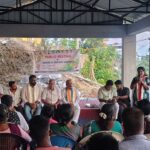
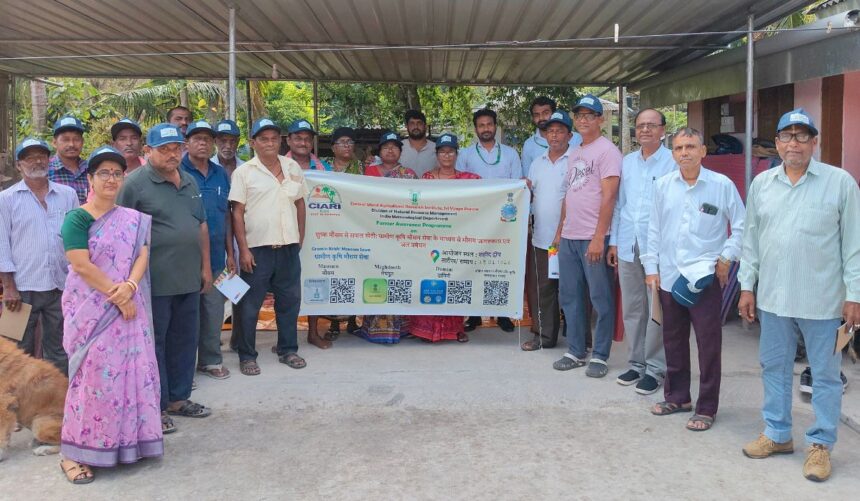
A Farmer Awareness Programme focusing on dry season farming and weather-based agricultural practices was organised by the Agrometeorological Field Unit (AMFU) of ICAR–Central Island Agricultural Research Institute (ICAR-CIARI) at Shaheed Dweep on January 29, 2026. The programme was conducted under the Gramin Krishi Mausam Sewa (GKMS) Project, a joint initiative of the Indian Council of Agricultural Research (ICAR) and the India Meteorological Department (IMD).
The programme aimed to enhance farmers’ awareness on dry season farming, weather advisories and efficient water management. A total of 33 farmers from Ramnagar, Bharatpur and Lakshmanpur villages participated in the programme, including five women farmers. The event also witnessed the presence of the Gram Pradhan, Panchayat members and officials from the Department of Agriculture, reflecting active community involvement.
Addressing the gathering, Dr. Abhilash, Scientist (Agricultural Meteorology) and Principal Investigator of GKMS, pointed out that the Andaman and Nicobar Islands receive very low rainfall during the period from January to April, leading to limited availability of irrigation water. He emphasized the need for judicious and planned use of water to sustain crops during the dry season. He explained the adverse effects of dry weather on crops, including soil moisture depletion, leaf yellowing, poor crop growth, flower drop and reduced yields.
Dr. Abhilash stressed that farming without weather information often results in wastage of water, fertilizers and labour, and underscored the importance of weather-based farming. Farmers were introduced to the GKMS and informed about the biweekly, weather-based, crop- and location-specific agromet advisories, which provide quantitative information on rainfall, temperature, wind speed and humidity. Advisories related to irrigation scheduling, fertilizer application, plant protection and drought management were explained in simple terms based on crop type and growth stage.
Guidelines on water management during dry weather were shared, including irrigating crops during early morning or evening hours, avoiding over-irrigation and planning irrigation based on weather forecasts. Farmers were also advised to adopt moisture conservation practices such as mulching with dry leaves, straw, coconut or arecanut husk, strengthening field bunds, and selecting crops with lower water requirements. The importance of short-duration and drought-tolerant crop varieties, proper plant spacing and the use of organic manures to improve soil moisture retention was also highlighted.
Dr. Hemareddy Thimmareddy, Technical Officer (GKMS), explained the benefits of adopting agromet advisories, noting that weather-based decision-making helps increase crop yield, conserve irrigation water, reduce cultivation costs and minimise weather-related losses. He also briefed the farmers on the interpretation and use of Agromet Advisory Bulletins (AABs) for crop planning and water management.
The programme introduced farmers to digital platforms such as the M-Kisan Portal, Meghdoot App, Damini Lightning Alert App and WhatsApp advisory groups, which provide timely weather alerts and advisories. The session concluded with discussions on moisture management during dry and pre-monsoon periods, followed by farmer feedback, experience sharing and suggestions to further improve weather-based advisory services.
The programme was coordinated by Dr. I. Jaisankar, Principal Scientist and Head, Division of Natural Resource Management, under the guidance and supervision of Dr. Jai Sunder, Director, ICAR-CIARI, Sri Vijaya Puram. The initiative was well received by the participating farmers, who expressed keen interest in adopting weather-based advisories to enhance farm productivity during the dry season.