Sri Vijaya Puram | February 11, 2026
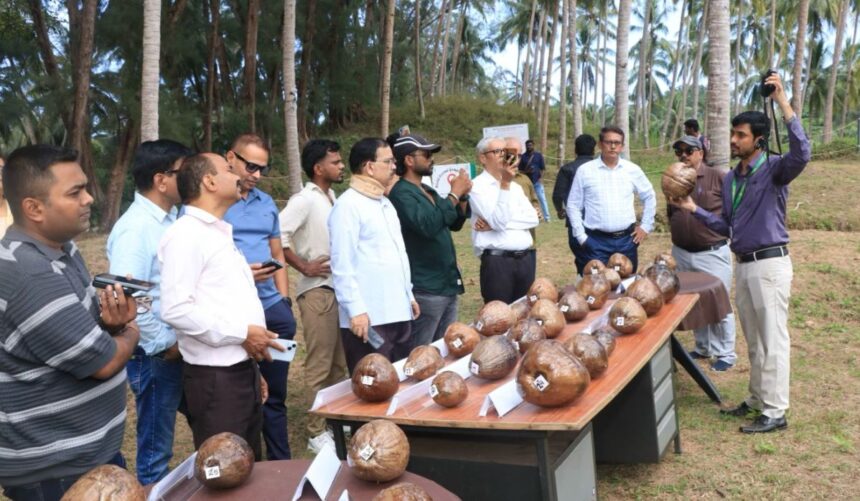
A 41-member media delegation from Chhattisgarh and Tamil Nadu visited the Horticulture Research Farm of ICAR–Central Island Agricultural Research Institute (CIARI) at Sippighat on Monday, gaining first-hand exposure to the institute’s agro-eco-tourism initiatives and the World Coconut Germplasm Centre (WCGC).
The delegation comprised 12 journalists from Chhattisgarh and 29 from Tamil Nadu and was led by Mr. Arun Kumar, Director, Prime Minister’s Communication Cell & PIB Chennai, along with Mr. Ramesh Jaibhaye, Deputy Director, PIB Raipur.
The programme began with a welcome address by Dr. Jai Sunder, Director, ICAR-CIARI, who highlighted the institute’s role in advancing sustainable agriculture and conserving vital genetic resources in island ecosystems. The visiting journalists were later taken on a guided tour of the 32-hectare research farm by Dr. Ajit Arun Waman, Senior Scientist and In-charge of Sippighat Farm.
During the visit, the delegation walked along the one-kilometre eco-tourism trail and observed a wide range of plantation crops, tropical fruits, spices and ornamental plants. The agro-eco-tourism model at Sippighat emphasises scientific plant husbandry practices, conservation of biodiversity and sustainable use of natural resources, while also offering quality planting materials to stakeholders.
A key highlight of the visit was the World Coconut Germplasm Centre, which conserves nearly 1,000 coconut palms representing diverse germplasm sourced from Asia-Pacific island nations and the Nicobar group of islands. The Centre maintains 30 conserved coconut accessions, including 24 original collections from Pacific island countries such as Solomon Islands, Fiji, Papua New Guinea, French Polynesia, American Samoa, Tonga and Samoa, along with six accessions from the Nicobar Islands, all preserved in the field gene bank at Sippighat.
The WCGC functions as a living repository dedicated to the conservation, evaluation and sustainable utilisation of coconut genetic resources. Recognising coconut’s immense economic, nutritional and cultural importance in tropical and island regions, the Centre aims to safeguard valuable indigenous and exotic collections from genetic erosion caused by climate change, pests, diseases and shifting land-use patterns.
Researchers at the Centre utilise conserved germplasm to assess key traits such as yield potential, nut quality, resistance to pests and diseases, tolerance to abiotic stresses and adaptability to coastal and island conditions. The genetic resources form the foundation for long-term crop improvement and breeding programmes tailored to vulnerable island ecosystems.
The delegation was also briefed on ongoing research activities, including inter se mating, pollen collection, selfing, germplasm multiplication and hybridisation programmes. Detailed morphological characterisation has been undertaken for six tall coconut accessions—Rennel Tall, Katchal Tall, Auck Chung Tall, Tahiti Tall, Tamaloo Tall and Pao Pao Tall—which have shown promise for enhanced nut yield, improved virgin coconut oil extraction and desirable nut traits.
Studies on the distinctive Niu Leka dwarf, known for its orange-coloured fruits, were also shared. Identified as a unique genetic resource derived from the Niu Leka Green dwarf population, the accession is being closely observed to facilitate the selection of superior mother palms and the development of compact dwarf varieties suited for future breeding programmes.
Apart from the germplasm centre, the delegates visited the Spice Processing Unit, where spices are processed using a blend of traditional and modern techniques. The Mangrove Viewpoint offered panoramic views of the surrounding mangrove ecosystem, while the plantation-based organic spice garden showcased traditional and organic cultivation practices. The serene one-kilometre nature trail provided visitors with an opportunity to experience the farm’s rich biodiversity in a tranquil setting.
The visit was coordinated by Mr. D. Karunakaran, Scientist, under the leadership and guidance of Dr. Jai Sunder, Director, ICAR-CIARI.