Sri Vijaya Puram | March 26, 2026
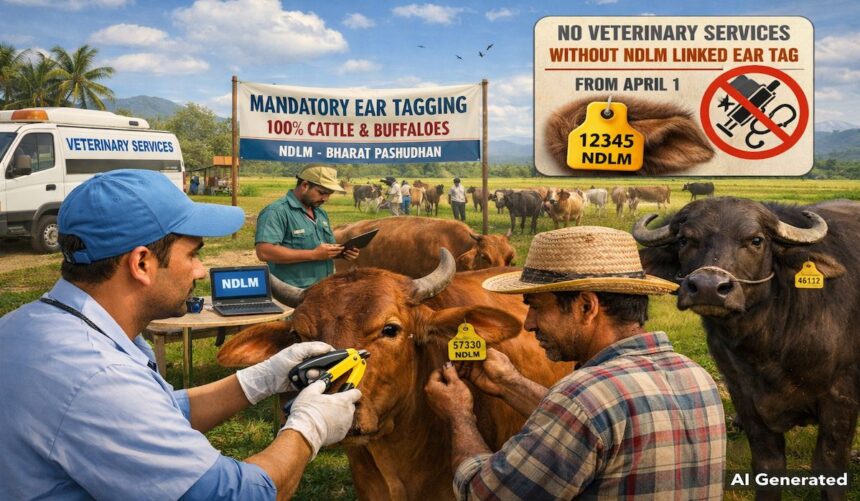
In a significant move towards digitising livestock management, the Department of Animal Husbandry & Veterinary Services has mandated 100% ear tagging of all cattle and buffaloes across the Andaman and Nicobar Islands by March 31, 2026.
The directive forms part of the National Digital Livestock Mission (NDLM), being implemented through the Bharat Pashudhan App/Portal, with the objective of creating a comprehensive, accurate, and real-time digital database of livestock and their owners in the Union Territory.
According to the Department, ear tagging will assign a unique identification number to each animal, enabling effective traceability and improved monitoring of animal health. The initiative is also expected to enhance breeding and genetic upgradation services, strengthen disease surveillance and control mechanisms, and ensure efficient maintenance of records related to vaccination, treatment, and government scheme benefits.
In a major enforcement measure, the Department has announced that from April 1, 2026, no veterinary services—including vaccinations, treatments, and health certifications—will be provided to cattle or buffaloes without a valid NDLM-linked ear tag.
Further, the issuance of Veterinary Health Certificates and Transportation Certificates for cattle and buffaloes has been suspended until further orders. These certificates will now be issued only after verification of ear-tagged identification recorded on the Bharat Pashudhan/NDLM portal.
Livestock owners have also been instructed to regularly update the portal with details of animals that are sold, deceased, or transferred, in order to maintain accurate and up-to-date records.
To ensure timely implementation, all Senior Veterinary Officers (SVOs) have been directed to carry out the ear tagging drive on a war footing and achieve complete coverage within the stipulated deadline. The Department has urged farmers and livestock owners to cooperate and get their animals tagged at the nearest veterinary institution, dispensary, or designated tagging centre.
Special camps and mobile tagging units will also be deployed in remote and rural areas to facilitate the process.
The initiative aligns with the Government of India’s vision of a digitally empowered livestock sector and is expected to contribute significantly towards disease control, improved productivity, better targeting of subsidies, and overall welfare of livestock-dependent communities in the islands.