Tarun Karthick
Sri Vijaya Puram, October 7, 2025
A 12-year-old boy tragically lost his life on Sunday, October 5, 2025, after drowning near the Munda Pahad area of Chidiyatapu while picnicking with his family. Following the incident, the Forest Department has suspended trekking activities at Munda Pahad until further orders.
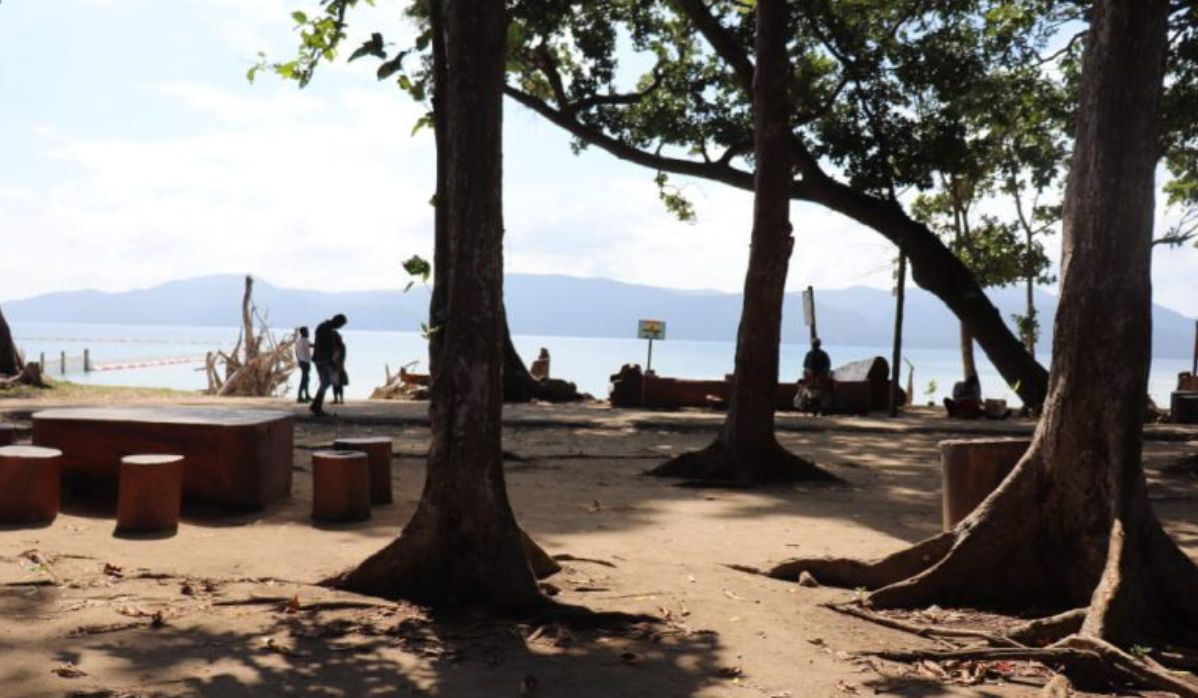
According to information gathered from reliable sources, the boy and his family had taken the trekking route leading to the Munda Pahad viewpoint. However, midway through the trail, the family reportedly deviated from the designated path and took an unauthorised detour toward the seashore.
Sources informed Nicobar Times that the deceased, along with a 13-year-old girl and a 25-year-old man, sat on a rock near the shoreline when a sudden wave struck and swept all three into the sea.
Family members rushed back to the Munda Pahad Beach entry point to call for help. Forest officials, police personnel, and lifeguards responded swiftly and managed to rescue all three individuals from the water. On-site officials administered CPR in an attempt to revive the boy and made every possible effort to save the victims.
Videos accessed by Nicobar Times show that after the victims were brought back to the beach, a tourist—who happened to be a doctor—also examined the boy and performed CPR. However, despite repeated attempts, the boy showed no pulse.
All three victims were immediately shifted to the District Hospital in Garacharma, where doctors stabilised the two survivors and referred them to G.B. Pant Hospital for specialised treatment. The 12-year-old boy, however, could not be revived.
The tragic incident has deeply saddened the community and prompted authorities to suspend trekking at Munda Pahad as a safety measure.
While the temporary closure may be necessary to review safety protocols, it raises broader questions about the frequent shutdown of tourist activities across the Andaman and Nicobar Islands. Tourism remains a cornerstone of the Islands’ economy, yet incidents such as the human-crocodile conflict at Wandoor—after which swimming was permanently banned—have gradually reduced the range of experiences available to visitors.
With swimming already restricted at Munda Pahad Beach and trekking now suspended, the number of safe and accessible tourist spots is shrinking. A balanced approach is essential — one that ensures visitor safety without paralysing the tourism sector.
Instead of blanket bans, authorities could consider deploying trained trekking guides and making it mandatory for tourists to hire them before accessing the Munda Pahad trail. Guide pooling for groups could keep the experience affordable while creating local employment opportunities.
Safety measures, awareness drives, and stronger enforcement of boundaries can prevent such tragedies without closing down attractions altogether.
In an unexpected move, the Forest Department has also restricted the carrying of food and eatables to the Munda Pahad Beach area. The decision has left many questioning its logic and relevance to the drowning incident.
While prohibiting plastic and enforcing safe disposal practices are understandable steps for environmental protection, banning food altogether appears arbitrary and counterproductive. Clear communication, proper waste management systems, and fines for non-compliance would be more effective than sweeping prohibitions that inconvenience visitors and dampen the overall tourist experience.
The incident at Munda Pahad is a sobering reminder of the importance of safety and preparedness—but closures and blanket bans cannot become the default response. The Islands must move toward smarter, safer, and more sustainable tourism management.