Sri Vijaya Puram | November 6, 2026
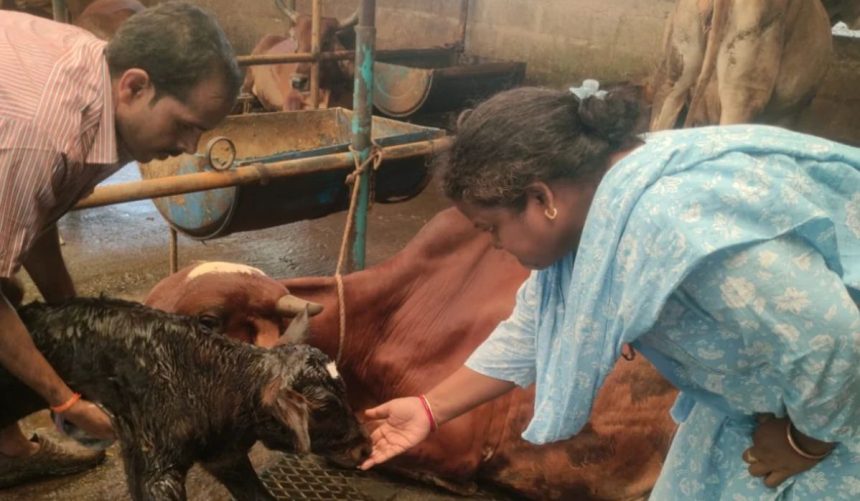
The Department of Animal Husbandry & Veterinary Services (AH&VS), Andaman & Nicobar Administration, has achieved a significant milestone in livestock development with the birth of the first three female calves through Embryo Transfer Technology (ETT) in the Andaman & Nicobar Islands.
The pioneering initiative, launched in February 2026 in collaboration with NDDB Dairy Services, marks the first successful implementation of advanced Embryo Transfer Technology under island conditions.
Under the scheme, the Department of AH&VS has entered into an agreement with Natern Dairy Services, a subsidiary of the National Dairy Development Board (NDDB), to establish high-genetic-merit crossbred pregnancies in local cattle through the transfer of embryos produced using in vitro techniques. The programme is being implemented under the Rashtriya Gokul Mission, with a target of establishing 220 pregnancies over a period of two years.
The calves produced through this technology are expected to have the potential to yield an average of 15 litres of milk per day. The initiative aims to enhance the productivity of local cattle and increase the availability of fresh milk in the Islands.
The Department has been implementing cattle crossbreeding programmes through artificial insemination to improve the genetic potential of local cattle, a process that generally takes three to four generations or 10 to 12 years. However, the adoption of ETT has reduced this period to three to four years. The high-genetic-merit cattle and their offspring are expected to help establish a dairy herd with higher milk-yielding capacity and gradually replace low-yielding animals.
Since the launch of the programme in February 2026, five phases have been completed, involving 112 embryo transfers. Pregnancy has been confirmed in 29 recipient animals, while another 34 animals are awaiting confirmation.
The first female calf produced through ETT in the Islands, named “Shri,” was born on November 1, 2026, at Kamraj Nagar. The second calf, “Navya,” was born at Manglutan, while the third, “Sasi,” was born at Port Mout. All three calves have been reported to be healthy, with the calvings taking place normally.
The Department of AH&VS has congratulated the beneficiary farmers and veterinary teams involved in the successful embryo implantation, pregnancy monitoring and calving.
The Department has also encouraged livestock farmers to come forward and avail themselves of the benefits of Embryo Transfer Technology and other advanced breeding services available at their nearest veterinary institutions.
The programme is expected to be expanded to more areas in the coming phases as the Department continues its efforts to strengthen dairy development and improve livestock productivity across the Andaman & Nicobar Islands.