Tarun Karthick
Sri Vijaya Puram, 23 September 2025
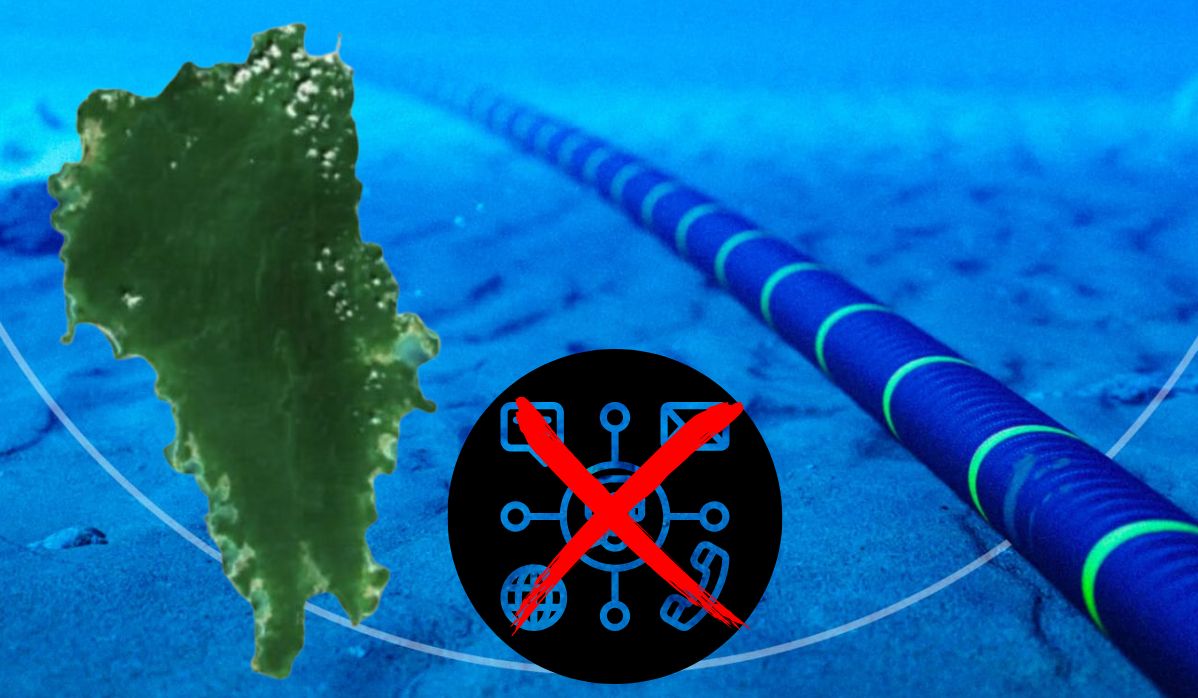
Great Nicobar, India’s southernmost island with immense strategic importance, has been pushed into a communication blackout for the fourth consecutive day. Since 3:32 pm on 20th September, both BSNL and Airtel have failed to provide any service, leaving thousands of residents cut off from the mainland and the outside world.
The disruption, reportedly caused by a fault in the CANI (Chennai–Andaman & Nicobar Islands) Submarine Optical Fibre Cable, has revealed the shocking absence of backup mechanisms. While BSNL managed to activate 2G services in Kamorta soon after the outage, Great Nicobar remains completely disconnected.
BSNL, despite being the primary service provider funded by public money, has fumbled in its response. On 22nd September—three days into the blackout—two staff members were flown to Campbell Bay with equipment to try and deploy 2G services. Even this meagre attempt has failed. As of 4:54 pm on 23rd September, no call could go through to any BSNL mobile in Campbell Bay, showing that the state-run giant lacks both preparedness and competence. In one embarrassing episode, mobile service briefly flickered back for a few minutes on 22nd September before collapsing again.
Airtel’s conduct has been worse. The private operator has no permanent staff stationed in Great Nicobar, has not sent a single technician to the island since the blackout began, and has made zero visible effort to restore services. Airtel’s silence and inaction amounts to abandoning its subscribers altogether.
Meanwhile, the blackout has crippled daily life. All three banks on the island, dependent on BSNL’s leased lines, are practically non-functional. ATMs have been shut for days, digital payments through UPI have collapsed, and residents—accustomed to cashless transactions—find themselves unable to purchase even essentials. Families of those posted in Great Nicobar are distressed, unable to establish contact with their loved ones. Long queues form at the handful of old BSNL copper-line broadband connections, where residents cling to snail-paced internet just to send a message or make a voice call.
The larger question is one of accountability. How could BSNL, a public sector undertaking responsible for connectivity in a sensitive border island, not have contingency plans or backup systems in place? Why was essential emergency equipment not stationed at Campbell Bay to ensure at least basic 2G connectivity in the event of submarine cable failure?
Equally troubling is Airtel’s neglect. A company that aggressively markets its nationwide coverage has demonstrated complete disinterest in servicing one of India’s most strategically significant territories.
Connectivity in Great Nicobar is not a luxury—it is a lifeline. To leave it cut off for four days exposes the failure of BSNL and Airtel.
Temporary fixes like deploying 2G must not distract from the urgent task: repairing the CANI submarine cable and establishing robust redundancies so this crisis is never repeated. Until then, the people of Great Nicobar remain abandoned—victims of corporate negligence and bureaucratic apathy in a place that deserves priority, not neglect.