Sri Vijaya Puram | May 25, 2026
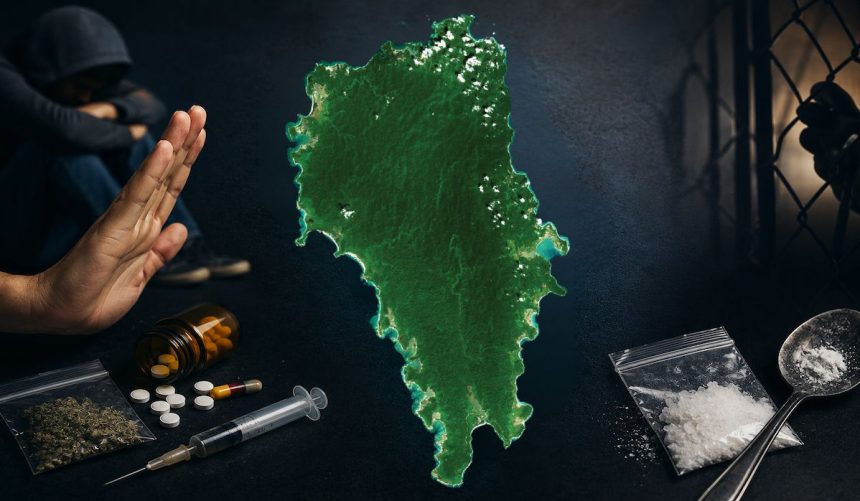
Concern is mounting over the growing drug abuse problem in Great Nicobar Island, with increasing reports suggesting that a large number of youths are falling prey to narcotic substances ranging from ganja to methamphetamine, while an underground drug network continues to operate in the region.
Despite the remote location of the southernmost Island of the Andaman and Nicobar archipelago, the menace of drugs has steadily spread across Great Nicobar, affecting families and the social fabric of the Island. The uninterrupted availability of narcotic substances has contributed to increasing addiction among youngsters, even as serious questions remain over the effectiveness of efforts to curb the illegal trade.
Methamphetamine, which has emerged as a major concern across the Islands in recent years, is now becoming a serious threat in Great Nicobar as well. Families are witnessing the gradual decline of their children and relatives due to substance abuse, often without access to proper guidance, counselling, or professional intervention.
Anti-social elements involved in the drug trade are systematically targeting youths and drawing them into addiction for financial gain. The network involved in the illegal trade appears to be operating cautiously to avoid scrutiny from law enforcement agencies.
One of the biggest challenges faced by families is the absence of dedicated professional support systems on the Island. At present, there is no specialised rehabilitation or counselling facility in Great Nicobar where parents can seek assistance or receive guidance on handling drug addiction cases within their families.
Drug addiction is a complex healthcare and social issue that requires sustained professional treatment, psychological support, and active involvement of families for successful rehabilitation. However, due to the lack of accessible professional help in Great Nicobar, many affected families continue to suffer in silence.
Fear of legal consequences and social stigma is also preventing several families and addicts from approaching authorities for assistance. Many fear that seeking help may expose them to police action, rather than directing enforcement efforts towards traffickers, peddlers, and suppliers operating the illegal network.
The issue cannot be resolved merely through suppression or isolated enforcement drives. A comprehensive strategy involving awareness campaigns, rehabilitation programmes, counselling services, and stronger anti-drug operations is urgently needed.
There is also an urgent need for the Administration and concerned departments to establish professional de-addiction and rehabilitation support facilities within Great Nicobar itself so that affected individuals and families can receive timely assistance without hesitation.
At the same time, stricter law enforcement measures are required to identify and dismantle drug supply chains operating in Great Nicobar and Little Nicobar Islands. Authorities must intensify operations to trace hidden stockpiles of narcotic substances and initiate strict legal action against those involved in hoarding, trafficking, and distribution of illegal drugs.
Preventive mechanisms at entry points into the Island also need to be strengthened. Permanent deployment of trained canine squads capable of detecting narcotic substances, along with intensified screening of incoming passengers and cargo arriving from mainland India and other Islands, is necessary to stop the inflow of drugs.
Further, public reward schemes should be introduced for individuals providing credible information regarding drug trafficking and hoarding activities. Publicly announcing reward amounts and ensuring anonymity and protection for informers could encourage greater public participation in combating the menace.
Addicts should be treated sympathetically and viewed as individuals in need of medical and psychological support rather than social isolation. Families should also be properly counselled and made aware that recovery from addiction is a gradual and sustained process requiring patience and long-term support.
If tackled effectively through a combination of strict enforcement, rehabilitation, awareness, and community participation, Great Nicobar could emerge as a model for anti-drug initiatives across the Andaman and Nicobar Islands.