Sri Vijaya Puram | March 27, 2026
The recent amendment to the Andaman and Nicobar Excise Policy, 2013, is not only being seen as a relief for licensed liquor outlets but also as a decisive step towards curbing the long-standing menace of illegal liquor sales across the islands. By allowing liquor shops and bars to remain open on most festivals, the Administration has effectively disrupted what was once a highly profitable window for illegal vendors.
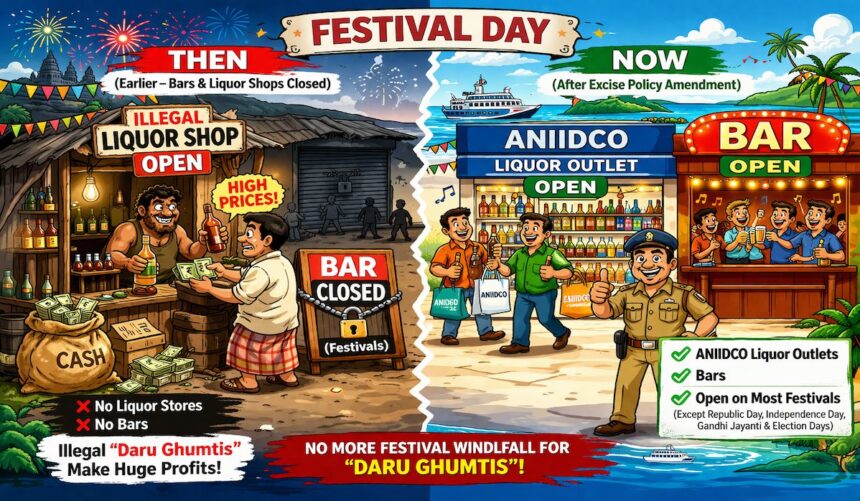
For years, major festivals in the islands had inadvertently turned into peak business days for illegal liquor sellers, locally known as “daru ghumtis.” With licensed ANIIDCO liquor stores and bars mandated to remain closed on numerous occasions such as Pongal, Holi, Diwali, Eid, Christmas, and other festivals, these unregulated operators would step in to fill the demand-supply gap.
Spread across the length and breadth of the islands — from Diglipur in North Andaman to Campbell Bay in Great Nicobar — such illegal vendors had mushroomed over time, creating an underground network that thrived particularly during dry days. Sources indicate that these operators would stockpile liquor through illegal channels in advance and sell it during festival closures at exorbitant prices, often making hefty profits in a short span.
The earlier policy, which enforced a long list of festival dry days, had unintentionally created an enabling environment for such illegal trade to flourish. In many cases, this not only resulted in revenue losses to the Administration but also contributed to the growth of an unregulated and potentially unsafe liquor market.
With the revised policy now permitting liquor shops and bars to operate on most festivals, except on key national days such as Republic Day, Independence Day, Gandhi Jayanti, and specified election-related days, the scope for illegal vendors to exploit festive demand is expected to shrink significantly.
Stakeholders believe that the move will help restore balance in the market by ensuring legal availability of liquor, thereby reducing dependence on unauthorised sources. The amendment, coupled with existing enforcement mechanisms, is expected to act as a deterrent against the proliferation of illegal liquor points.
The policy revision is being viewed as a corrective measure to address unintended consequences of the earlier framework, which had allowed illegal operators to thrive. By closing this loophole, the Administration has taken a step in the right direction towards regulating the liquor trade more effectively and curbing unlawful activities that had made many such operators disproportionately wealthy.
With immediate effect from February 26, 2026, the new policy is expected to not only benefit licensed businesses but also strengthen regulatory control, ensuring that the liquor trade in the islands remains safer, more transparent, and within the legal framework.