Campbell Bay | October 18, 2026
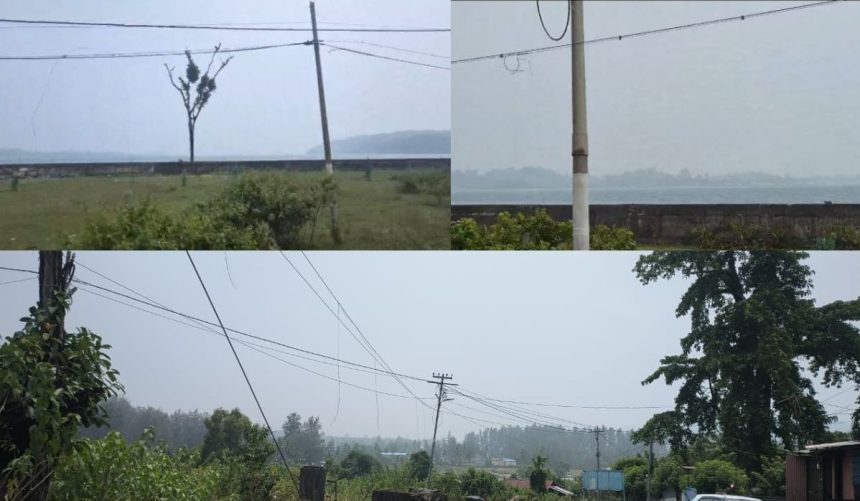
Haze has been reported across Campbell Bay and other parts of Great Nicobar Island since October 16, raising the possibility of a link to the forest fires currently affecting parts of neighbouring Indonesia. However, the cause of the haze has not been officially confirmed.
Nicobar Times received several calls from residents of Great Nicobar Island who reported hazy conditions in Campbell Bay and other areas from Friday. Residents described the haze as clearly visible, although they said it had not affected their daily activities.
According to residents, the haze appeared to have subsided to some extent on Sunday compared with Saturday. Some attributed the improvement to rainfall, although this could not be independently verified.
No breathing difficulties or other health problems associated with the haze were reported by the residents who contacted Nicobar Times.
The haze in Great Nicobar has been reported at a time when Indonesia is dealing with widespread forest fires, which have generated smoke and contributed to haze in parts of Southeast Asia.
Reports from the region have highlighted the effects of smoke and deteriorating air quality in neighbouring countries, including Malaysia and Singapore. The haze has raised concerns over public health and, in some affected areas, disrupted normal activities and transportation.
Indonesia’s forest and peatland fires are a recurring source of transboundary haze in Southeast Asia. Depending on the location and intensity of the fires, as well as prevailing wind patterns, smoke can travel across national boundaries and affect areas far from the burning sites.
Great Nicobar Island’s geographical proximity to Indonesia has prompted questions about whether smoke from the ongoing fires could have reached the southernmost part of the Andaman and Nicobar Islands.
However, the presence of fires in Indonesia and reports of haze in other countries do not, by themselves, establish a connection with the conditions observed in Great Nicobar. Confirmation would require relevant satellite observations, wind-direction data and meteorological assessments for the period during which the haze was reported.
As of Sunday, October 18, no authority had confirmed that the haze in Great Nicobar was caused by Indonesia’s forest fires.
Residents who spoke to Nicobar Times said the hazy conditions had been noticeable since Friday and remained evident on Saturday. By Sunday, some felt that the haze had become less pronounced.
While some residents suggested that rainfall might have helped reduce the haze, no official assessment was available to establish whether rain had contributed to the apparent improvement.
The extent of the haze, its composition and the concentration of any airborne pollutants also remain undetermined in the absence of air-quality monitoring data for the reported episode.
Residents recalled that Great Nicobar Island had experienced similar hazy weather on an earlier occasion, which they associated with an incident in neighbouring Indonesia.
For now, the latest episode has been characterised by visible haze reported across Campbell Bay and other parts of Great Nicobar since October 16, without any significant disruption to daily life reported to Nicobar Times.
Whether the haze originated from Indonesia’s forest fires or from another source remains to be established. Meteorological observations and an official assessment would help determine its origin and whether the conditions have any implications for residents of Great Nicobar Island.