Sri Vijaya Puram | October 16, 2026
ICAR-Central Island Agricultural Research Institute (CIARI) has imparted training to officials of the Department of Agriculture, Andaman and Nicobar Administration, on scientific techniques for year-round production of Indian Bay Leaf planting material, with the aim of promoting spice cultivation and improving farmers’ access to quality plants.
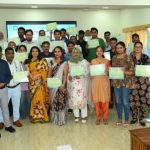
The need-based training programme, titled ‘Dweep Goottee 365 Technology for Multiplication of Indian Bay Leaf’, was organised on October 14 following a request from the Agriculture Department. A total of 21 officials from all three districts of the islands participated in the programme.
Indian Bay Leaf, popularly known as tejpat or tejpatta, is widely used in household and commercial cooking. Given the importance of tourism in the islands’ economy, the promotion of its cultivation could provide an additional source of income for farmers while supplying quality produce to local hotels and other establishments.
However, the availability of quality planting material has remained a challenge. Indian Bay Leaf, a native of the Himalayan foothills, does not flower or produce fruits under the island conditions, making conventional seed propagation difficult.
To address this constraint, ICAR-CIARI researchers Dr. Ajit Arun Waman and Dr. Pooja Bohra standardised air layering as a method of vegetative propagation. As the technique is largely restricted to the rainy season for successful multiplication, the researchers subsequently developed Dweep Goottee 365, an approach aimed at enabling planting material production throughout the year.
The institute has also developed Dweep Tej 1, described as the country’s first improved variety of tejpat. The institute said the propagation techniques are essential for multiplying such improved planting material.
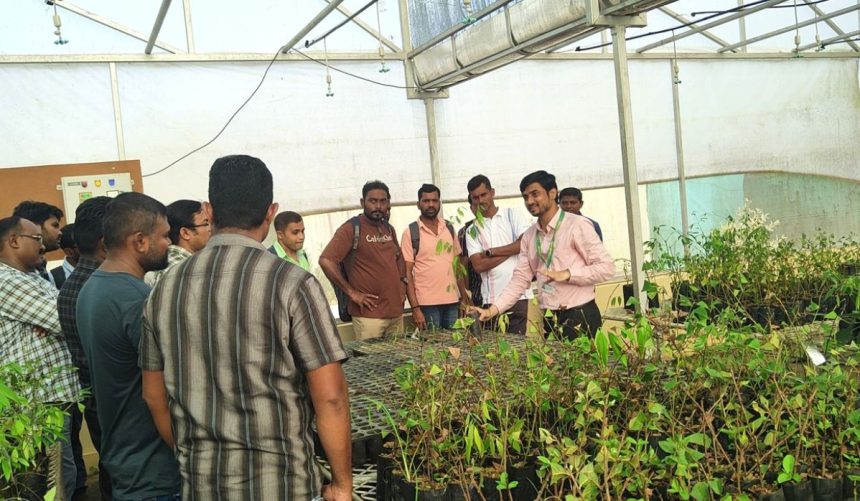
During the training, Dr. Ajit Arun Waman, Course Director, explained the advantages of Dweep Goottee 365 over conventional air layering. Participants received hands-on training in both techniques and were familiarised with the maintenance of mother plants, use of appropriate rooting hormones, handling of rooted layers after separation, microclimate management and plant protection in nurseries.
The participants also visited different protected structures at the institute’s Horticultural Plants Propagation Unit to understand their use at various stages of plant propagation.
The practical sessions were followed by an interaction in which officials discussed technical challenges encountered in propagating Indian Bay Leaf and other spice crops. Dr. Pooja Bohra and Dr. Ajit Waman provided suggestions to address the issues raised.
During the valedictory programme, Dr. Jai Sunder, Director (A), ICAR-CIARI, interacted with the participants and encouraged them to apply the knowledge gained in their respective areas of work to benefit farmers across the islands.