Car Nicobar | June 17, 2026
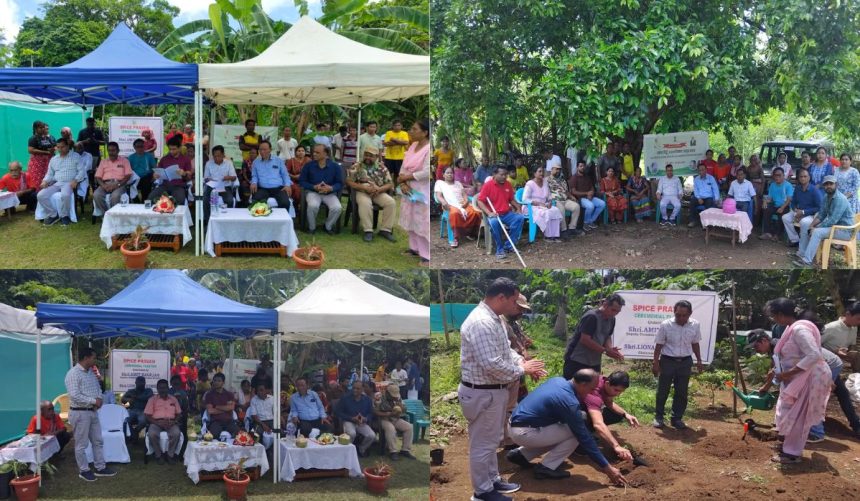
As part of the nationwide Khet Bachao Abhiyan launched by the Indian Council of Agricultural Research (ICAR) and the ongoing Spice Pravah 2.0 campaign, ICAR–Krishi Vigyan Kendra (KVK)-CIARI, Nicobar, in collaboration with the Department of Agriculture, Car Nicobar, organized an awareness and demonstration programme on sustainable agriculture and vermicomposting at Big Lapathy Village on June 17.
The programme aimed to create awareness among farmers on sustainable agricultural practices, organic nutrient management, vermicomposting, and spice cultivation to improve soil health and farm productivity. A total of 35 farmers, including 17 men and 18 women, participated in the event.
The programme was attended by Mr. Amit Kale, IAS, as the Chief Guest, while Mr. Lionel Nicomed, Chairman of the Tribal Council (CTC), Car Nicobar, participated as the Guest of Honour. Mr. Manuah Thomas, First Captain of Big Lapathy Village, was also present and extended his support to the farming community.
Addressing the participants, Dr. Santosh Kumar, Senior Scientist-cum-Head, ICAR–KVK Nicobar, delivered a technical session highlighting the importance of vermicomposting in sustainable agriculture. He explained that vermicompost enhances soil fertility, improves nutrient availability, increases soil organic carbon, promotes beneficial microbial activity, and reduces dependence on chemical fertilizers. He also encouraged farmers to make effective use of locally available organic residues and farm waste to produce quality vermicompost.
As part of the practical demonstration, three HDPE vermibeds were distributed and installed in the village to promote vermicompost production. One of the vermibeds was set up at the farm of Ms. Ester, a progressive farmer of Big Lapathy. Farmers were provided hands-on training on vermibed installation, earthworm management, moisture regulation, feeding practices, and harvesting of vermicompost.
The demonstration generated considerable interest among participants, many of whom expressed their willingness to establish vermicomposting units on their farms.
Speaking on the occasion, Mr. Amit Kale, IAS, appreciated the efforts of ICAR–KVK Nicobar and the Department of Agriculture in implementing Khet Bachao Abhiyan and Spice Pravah 2.0 across the Nicobar district. He lauded initiatives promoting sustainable agriculture, organic farming, and natural resource conservation, and encouraged farmers to adopt scientific and environmentally friendly technologies to improve productivity, soil health, and farm income.
Mr. Lionel Nicomed emphasized the importance of soil conservation and sustainable farming practices for the long-term agricultural development of the Nicobar Islands. He appreciated the technical support and capacity-building efforts being undertaken for the benefit of the farming community.
Mr. Manuah Thomas welcomed the initiative and urged farmers to actively participate in developmental programmes and adopt recommended technologies such as vermicomposting and organic nutrient management to achieve sustainable agricultural growth.
The programme also provided a platform for interaction between farmers, scientists, and officials, during which issues related to vermicomposting, soil fertility management, spice cultivation, organic farming, and sustainable agricultural practices were discussed.
The event concluded with a vote of thanks to the Chief Guest, Guest of Honour, village representatives, participating farmers, officials of the Department of Agriculture, and ICAR–KVK staff for their support and cooperation in making the programme a success.
The programme was organized under the guidance of Dr. Jai Sunder, Director, ICAR-CIARI, Sri Vijaya Puram, with the objective of strengthening sustainable agricultural practices and improving the livelihoods of farmers across the Nicobar district.