Sri Vijaya Puram | April 11, 2026
The recent restrictions imposed on travel to Indira Point in Great Nicobar, following the registration of an FIR against three individuals, have once again highlighted a long-standing issue that continues to affect residents, visitors and local livelihoods on the island.
Great Nicobar is unique within the Nicobar group of islands as it comprises both notified tribal reserve areas and revenue villages. This overlapping status has, over the years, created a complex situation on the ground, where legal provisions and practical realities often stand in contrast.
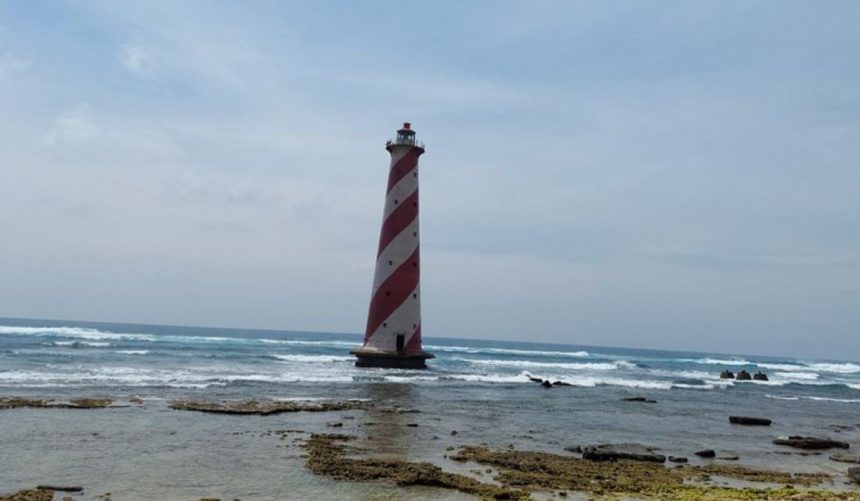
Indira Point, the southernmost tip of India, remains one of the most significant and sought-after destinations for anyone visiting Great Nicobar. The location holds immense tourism potential for the future, and even at present, it continues to feature prominently on the itinerary of visitors travelling to the island.
Over the past three years in particular, a number of local entrepreneurs have built their livelihoods around facilitating travel to Indira Point. By providing vehicles and related services, they have been catering to visitors and residents alike, earning a substantial income through these activities.
However, the recent FIR registered against three individuals, including a local settler, for alleged violation of the Andaman and Nicobar Islands (Protection of Aboriginal Tribes) Regulation, 1956 has brought the issue of access to Indira Point back into focus. This is the first such FIR in the past few years. The last publicly known case dates back to a few years ago, when action was taken against a local PRI member and others during a scheduled VVIP visit, which had drawn considerable criticism from local residents.
Despite the existence of legal restrictions, the ground reality has been markedly different. The road leading to Indira Point is now being constructed and is motorable. Over time, locals, visitors and even senior officials of the administration have travelled to Indira Point. Beyond official duties, visits have also taken place to nearby areas such as Galathea Bay, including for purposes like observing turtle nesting and for general recreational visits.
In this context, the sudden imposition of restrictions following the recent FIR has come as a disruption, particularly for those whose livelihoods depend on facilitating such travel. Entrepreneurs engaged in transport and related services are now facing uncertainty due to the curbs placed by the local administration.
At the same time, it remains a fact that the law continues to be in force. Until it is amended or modified, its provisions apply. The core of the issue lies in the existing legal framework governing Great Nicobar.
The Andaman and Nicobar Islands (Protection of Aboriginal Tribes) Regulation, 1956 came into force on the first day of 1956 through a notification issued by the then Chief Commissioner on June 19, 1956. Subsequently, through Notification No. ANPATR/3(1)/1 dated April 2, 1957, the entire area comprised within the coastline of Great Nicobar was declared a tribal reserve.
Later, on April 20, 1972, an amendment was issued to the 1957 notification. Through this amendment, a specific geographical area—falling between Longitude 93°50′ East and 93°57′ East, and Latitude 6°53′ North and 7°2′ North—was excluded from the tribal reserve. However, despite this exclusion, the broader issue of overlap between settlement areas and the notified reserve has persisted.
Even today, revenue villages such as Gandhi Nagar and Shastri Nagar, which were settled by the Government, fall within the notified tribal reserve area. This creates a situation where settlers, in their day-to-day lives, may technically be in violation of the provisions of the regulation.
A detailed report published by Nicobar Times on November 9, 2020, titled “Issues Pertaining to Tribal Reserve Area in Great Nicobar; Residents Unknowingly Violating ANPAT Regulation”, had already highlighted these concerns and pointed out the underlying structural problem.
Given the current situation, it is evident that as long as the existing notification remains unchanged, such conflicts and enforcement actions are likely to continue. The recent FIR and subsequent restrictions are only a reflection of this larger unresolved issue.
A practical and long-term solution lies in issuing a fresh notification to de-notify the stretch of tribal reserve along the north–south road—from south of Laxmi Nagar village, where the tribal reserve area begins, up to Indira Point. While doing so, areas of genuine interest to tribal communities can be retained under protection.
At the same time, even in such protected stretches, the road itself should be excluded from the tribal reserve framework to ensure uninterrupted movement of people to Indira Point. Adequate safeguards can be put in place to protect tribal interests along the route without restricting access entirely.
Continuing to keep the entire stretch under the ambit of a tribal reserve, despite the existence of settlements, road connectivity and regular movement, places an undue burden on residents and restricts economic opportunities, particularly in tourism.
In view of the ongoing issues and the impact on local livelihoods and movement, there is a pressing need to address the matter comprehensively. Expediting the process of de-notification of the required stretch is essential to resolve the challenges currently being faced by the people of Great Nicobar and to enable balanced development while safeguarding tribal interests.