Sri Vijaya Puram | August 20, 2026
A three-day training programme on the scientific cultivation and post-harvest management of major spice crops of the Bay Islands was organized by ICAR-Central Island Agricultural Research Institute (ICAR-CIARI) from August 17 to 19, 2026, under the CSS-MIDH Project on Spices.
Spices are among the major commercial crops of the Andaman and Nicobar Islands. However, limited awareness about scientific cultivation and post-harvest management practices among growers can affect productivity and profitability. The programme was organized to create awareness about the potential of spice cultivation, processing and value addition as viable business opportunities, particularly for island youth.
The programme was inaugurated by Dr. Jai Sunder, Director (A), ICAR-CIARI. In his inaugural address, he highlighted the historical significance of spices in India and their economic value, and encouraged participants to make full use of the technical sessions conducted during the programme.
Dr. Ajit Arun Waman, Principal Investigator of the CSS-MIDH Project on Spices and Course Director, delivered a session on scientific cultivation practices for traditional and novel spice crops, including black pepper, cinnamon, tejpat, nutmeg, clove, ginger, turmeric, woody pepper, culantro and mango ginger.
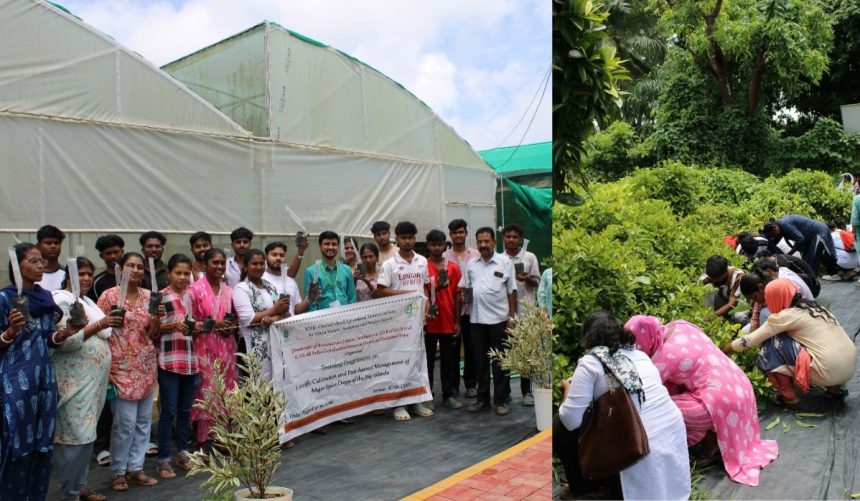
Dr. Pooja Bohra, Course Director, sensitized participants on propagation techniques for producing quality planting material and highlighted the business prospects of the nursery sector. Hands-on sessions covered vegetative propagation methods such as division, cuttings, air layering, serpentine layering, softwood grafting, approach grafting and Dweep Goottee 365, a propagation technique developed by ICAR-CIARI.
Participants were also given practical exposure to different protected structures used for producing quality planting material, including naturally ventilated polyhouses, climate-controlled polyhouses, shade-net houses and poly tunnels.
As part of the field-based training, participants visited the Horticulture Research Farm at Sippighat, where they were introduced to different cropping systems involving spice crops such as cinnamon, black pepper, woody pepper, clove, nutmeg, turmeric, mango ginger and ginger. Practical sessions on nutrient management, use of weed mats and plant protection chemicals were also conducted to familiarize participants with intercultural management practices.
A demonstration on cinnamon harvesting using Dweep CinnRub, a cinnamon bark rubbing tool developed by ICAR-CIARI, was also conducted. Participants received practical training in mechanical drying, packaging and storage, including demonstrations of the machinery used for these processes at the Horticultural Quality Analysis Laboratory.
The participants also visited the Institute’s essential oil distillation unit, where they were given firsthand exposure to the distillation process and its potential for value addition in spice-based enterprises.
A total of 21 participants from different parts of the islands attended the programme, including members of self-help groups, educated youth, entrepreneurs and kitchen gardeners. Participants expressed satisfaction with the planning and conduct of the training programme.
The programme concluded on August 19 with the distribution of certificates, along with planting material and spice products, to the participants.