Sri Vijaya Puram | April 6, 2026
The Electricity Department has announced a revised load shedding schedule for South Andaman, reducing the duration to 45 minutes, primarily during evening hours. The new schedule comes into immediate effect and will remain in force for at least 30 days.
According to official information, the earlier schedule issued on December 16, 2025, had prescribed an average load shedding duration of 60 minutes. However, during March this year, the actual load shedding implemented was approximately 45 minutes, reflecting improved power availability.
The reduction has been made possible due to ongoing augmentation efforts aimed at enhancing power generation capacity across South Andaman. These include the addition of 2.5 MW generating capacity at Phoenix Bay Power House and the commissioning of a new 5 MW power plant by M/s Modern Hiring Services on February 3, 2026. These measures have significantly reduced the power shortage in the region.
Under the revised plan, load shedding during day and night hours has been exempted. However, officials clarified that any such outages, if required, would depend on unforeseen shortages caused by weather conditions or technical faults.
The Department further informed that several projects are in progress to eliminate load shedding entirely. These include the upcoming commissioning of a 10 MW HPP by M/s Sudhir Sales & Services Ltd., along with in-house augmentation through installation of 3 x 2000 KVA DG sets at Phoenix Bay Power House and 7 x 2000 KVA DG sets at Chatham Power House, both currently under tendering.
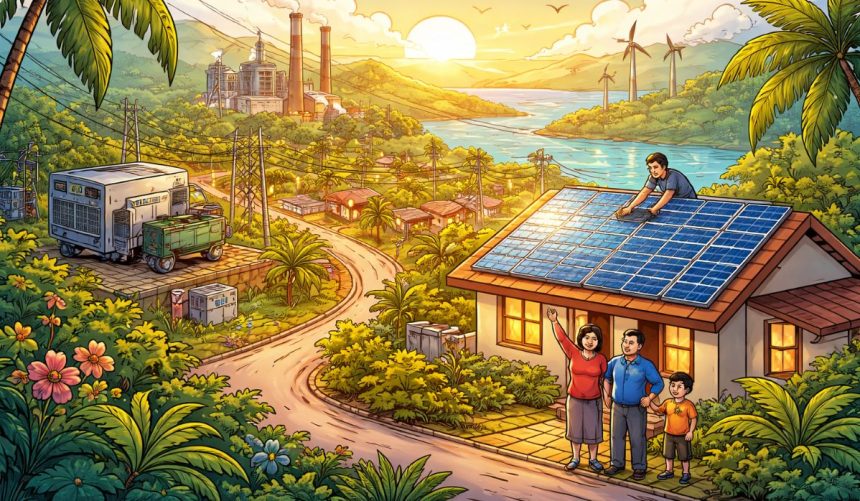
Meanwhile, the Administration has urged consumers to adopt rooftop solar solutions under the PM Suryaghar Muft Bijli Yojana. The scheme offers subsidized installation, enabling households to reduce electricity bills and even supply surplus power back to the grid, promoting energy independence.
Appealing for public cooperation, the Administration emphasized the importance of energy conservation during this period and encouraged residents to contribute towards achieving India’s net-zero emission goals.