Sri Vijaya Puram | March 22, 2026
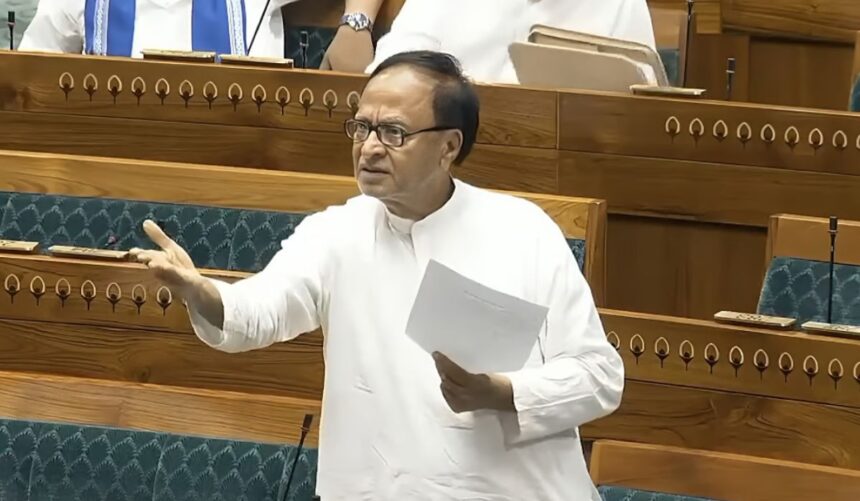
Member of Parliament from the Andaman & Nicobar Islands, Bishnu Pada Ray, has written to Prime Minister Narendra Modi raising serious concerns over environmental governance and coastal management in the Islands.
In his communication, the MP highlighted what he termed a critical gap in the regulatory framework under the Environment (Protection) Act, 1986 and the Coastal Regulation Zone (CRZ) Notification, 2019. He noted that while existing laws primarily regulate where development can take place, they fall short in addressing what is discharged into the sea after such activities, posing a significant threat to the fragile island ecosystem.
Emphasising the ecological sensitivity of the Andaman & Nicobar Islands, Ray stated that there is effectively no “safe zone” in such territories, as even permitted development can result in irreversible environmental damage if waste and effluents are not properly managed.
The MP also raised concerns over what he described as a growing administrative disconnect in the Islands, which he said has worsened over the past eight years. He pointed out that reduced public engagement and a tendency to avoid or stall statutory processes, rather than strengthening them, have adversely impacted policy implementation and weakened public confidence.
Drawing attention to challenges faced by residents, Ray observed that excessive regulations, high compliance costs and procedural complexities have made compliance difficult, often leading people to bypass rules. He stressed that this reflects shortcomings in policy design rather than failure on the part of citizens.
Highlighting key issues on the ground, the MP flagged continued dependence on diesel-based power, gaps in sewage treatment and waste management infrastructure, and increasing tourism pressure without corresponding infrastructure capacity.
Calling for urgent reforms, Ray proposed a shift towards a performance-based coastal management framework focused on measurable environmental outcomes instead of zoning restrictions alone. His recommendations include universal sewer connectivity, advanced sewage treatment systems, development of marine outfall infrastructure, and real-time monitoring of effluent discharge.
He further stressed that environmental protection should be primarily the responsibility of the government through robust infrastructure creation, rather than placing a disproportionate burden on citizens.
As a forward-looking measure, the MP suggested that rationalisation of airfares to improve tourism connectivity could be complemented by a nominal “Island Sustainability Fee” linked to visitors’ duration of stay, ensuring tourism contributes directly to infrastructure development without burdening local residents.
Ray has urged the Prime Minister to direct the concerned ministries to undertake a comprehensive review and implement an island-specific, performance-driven coastal management framework, along with steps to restore administrative responsiveness and strengthen public trust in governance.