Sir Vijaya Puram | November 7, 2026
Commercial poultry hatcheries and chick suppliers have been advised to discourage routine hot-blade beak trimming and adopt humane, welfare-oriented poultry farming practices, with emphasis on Infrared Beak Treatment (IRBT).
Hot-blade beak trimming is commonly practised in poultry farms to control injurious pecking and cannibalism. However, the procedure causes pain, tissue damage and stress, besides potentially leading to long-term complications, including chronic pain and impaired feeding.
The practice has been cited as a violation of Section 11(1)(l) of the Prevention of Cruelty to Animals Act, 1960, which prohibits the mutilation of animals.
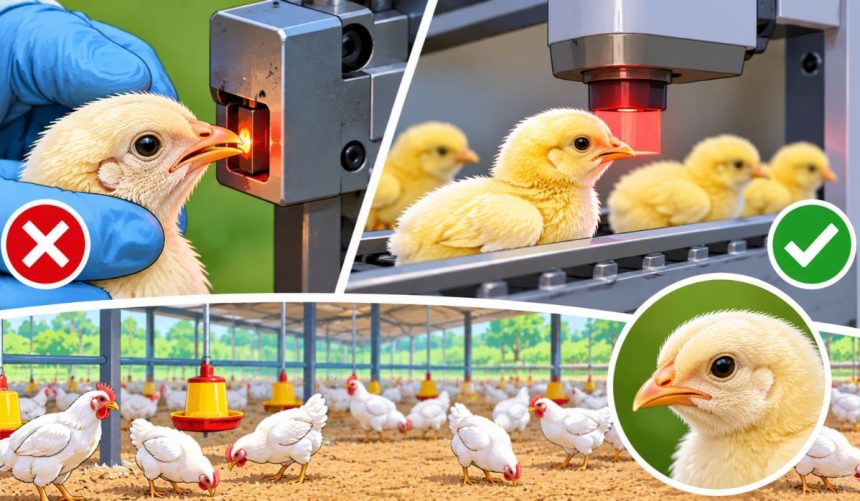
As a comparatively humane alternative, Infrared Beak Treatment involves the use of automated machinery at hatcheries to treat day-old chicks with a focused infrared beam. The treated beak tip sloughs off naturally within two to three weeks without leaving an open wound.
Infrared-treated birds have also been reported to demonstrate better body weight, feed intake and feed conversion compared to birds subjected to conventional hot-blade trimming.
Commercial hatcheries and poultry chick suppliers have been advised to adopt IRBT wherever beak treatment is considered necessary, subject to applicable legal requirements.
The guidelines further emphasise the promotion of bird welfare and productivity through humane beak treatment practices, which can help improve feed intake, body weight gain and overall flock performance while minimising avoidable pain and suffering.
Poultry farmers have also been advised to adopt improved husbandry and management practices to prevent injurious pecking and cannibalism. These include ensuring adequate space, appropriate stocking density, balanced nutrition, suitable lighting and proper environmental management.
The advisory aims to encourage humane and welfare-oriented poultry farming practices while addressing the management challenges associated with injurious pecking and cannibalism.