Sri Vijaya Puram | November 2, 2026
Small-scale fishers in South Andaman have raised concerns over the vulnerability of their livelihoods, calling for legal recognition of their rights to access, use and protect marine waters and fish resources. They have also sought compensation for all small-scale fishing households during seasonal fishing bans and cyclonic weather to help them sustain their families during lean periods.
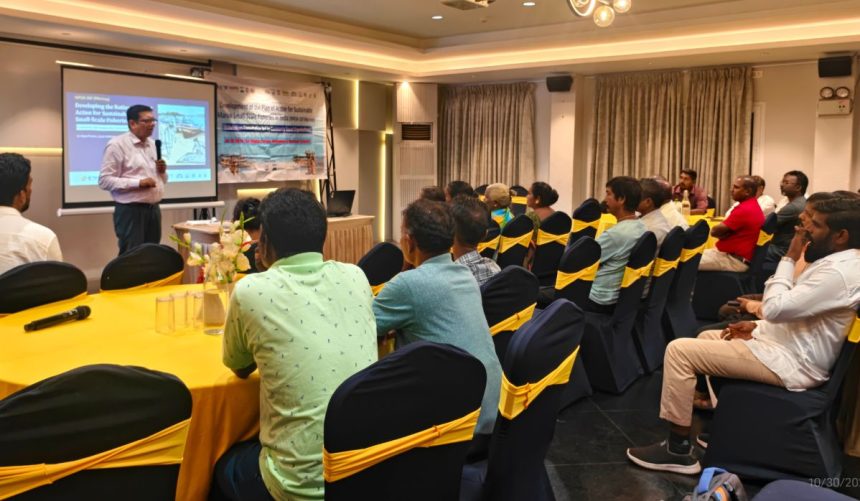
The demands were raised during a one-day consultation meeting held at TSG Emerald Hotel, Sri Vijaya Puram, on October 30. The meeting was attended by 40 participants from ten fishing villages across South Andaman, representing diverse groups, including women fish vendors, traders and migrant workers.
The consultation was facilitated by Pradeep Chatterjee, President of the National Federation of Small-scale Fishworkers (NFSF), with support from the Dakshin Foundation team, the Bay of Bengal Programme Inter-Governmental Organisation (BOBP-IGO) and the Department of Fisheries.
The consultation forms part of the process of drafting the National Plan of Action for Securing Sustainable Small-Scale Fisheries (NPOA-SSF Marine) in India. The draft plan is based on the Voluntary Guidelines for Securing Sustainable Small-Scale Fisheries (SSF Guidelines) developed by the Food and Agriculture Organization (FAO) of the United Nations. The guidelines advocate a bottom-up approach to policymaking that protects fish resources while safeguarding the rights and livelihoods of small-scale fishers and fish workers.
During discussions on social development and decent work, participants called for an increase in the existing compensation of Rs. 3,000 per household annually during lean fishing periods. They also sought the inclusion of women fishers and non-BPL small-scale fishing families in compensation schemes.
On governance of tenure and fishing policies, fishers demanded stricter enforcement of the separation of fishing grounds between small-scale fishers and mechanised boats, as provided under the Andaman and Nicobar Marine Fishing Regulation. They also called for legal recognition of their rights over nearshore fishing grounds and greater participation in framing fisheries management plans for the islands.
Participants expressed concern over the rapid decline in nearshore fish stocks, which they said had severely affected the livelihoods of small-scale fishers in recent years. They also identified the threat of crocodile attacks as a major challenge to their livelihood and stressed the need for effective measures to address the issue.
Women fish vendors highlighted the need for safe market spaces equipped with basic facilities, including drinking water and toilets. They also pointed out that existing schemes and entitlements were not adequately focused on small-scale fishers, particularly women engaged in the sector.
Dr. Naveen Namboothiri, Founder Trustee of Dakshin Foundation and a member of the National Task Force (Marine) constituted by the Ministry of Fisheries, Animal Husbandry and Dairying for drafting the NPOA, said the consultations provided a landmark opportunity for small-scale fish workers to raise their concerns and place them on record to help shape the National Plan of Action for Small-Scale Fisheries in India’s marine fisheries sector.
Similar consultations are being coordinated across coastal States and islands by a consortium of fisher organisations and associations, with support from BOBP-IGO and the Union Department of Fisheries.
An earlier consultation was held at Diglipur on October 13 for fishers from North and Middle Andaman. Inputs gathered from fishers across both districts will be incorporated into the draft National Action Plan.