Sri Vijaya Puram | August 10, 2026
Ayush Singh
Serious concerns have been raised over the availability of trainers, practical training equipment and hostel facilities at Government ITI Car Nicobar by a former trainee of the institute, who alleged that students of the 2025–26 batch faced significant difficulties during their course.
In an email to Nicobar Times, the pass-out trainee, who was also a hostel resident, alleged that there was a shortage of trainers across trades and inadequate equipment for practical training. The trainee said the concerns were being raised to ensure that students joining the 2026–27 batch do not face similar difficulties.
According to the former trainee, students enrolled in the Welder trade received practical training primarily in Arc Welding, while the facilities and equipment required for Gas Welding, MIG Welding, TIG Welding, Spot Welding and other prescribed processes were reportedly unavailable. The trainee alleged that the lack of equipment affected the practical skill development of students.
The trainee also alleged that the Electrician trade remained without a dedicated trainer from April onwards, resulting in students receiving inadequate theoretical and practical instruction. The email further claimed that students had to appear for practical examinations despite having limited exposure to the required equipment and processes.
Responding to the concerns, the In-Charge acknowledged that the institute had been facing a shortage of trainers. He attributed the difficulty in attracting trainers to Car Nicobar partly to the lack of private residential accommodation for staff. He said the institute provides hostel accommodation, but trainers are often reluctant to take up postings due to the absence of private accommodation.
He also said efforts had been made to address the shortage and that communication had been received regarding new appointments.
Regarding the Electrician trade, the In-Charge said that although a full-fledged trainer was not available, the institute had made arrangements using the available technical staff. He said one staff member, identified as Natrajan, had been looking after the trade, while technical personnel from another trade were also engaged to teach electrical subjects. However, he acknowledged that the arrangement could not provide full-fledged instruction.
The In-Charge also confirmed that the availability of welding equipment was a limitation. He said basic equipment was available at the institute, but costly equipment required for processes such as MIG and TIG welding was not available.
He added that students were prepared through mock tests and practical exercises based on the trade requirements and the equipment available at the institute.
He said the institute had been sending letters from time to time seeking the required resources and that the authorities concerned had been informed of the difficulties.
Regarding allegations that students were threatened with being prevented from appearing in examinations for raising concerns, the Campus In-Charge denied that students were told they would not be allowed to sit for examinations.
He also denied allegations that students had been threatened for raising issues. He said some students who did not meet the mandatory minimum attendance requirement were informed about the shortage in their attendance, and this was not connected to the concerns raised by them.
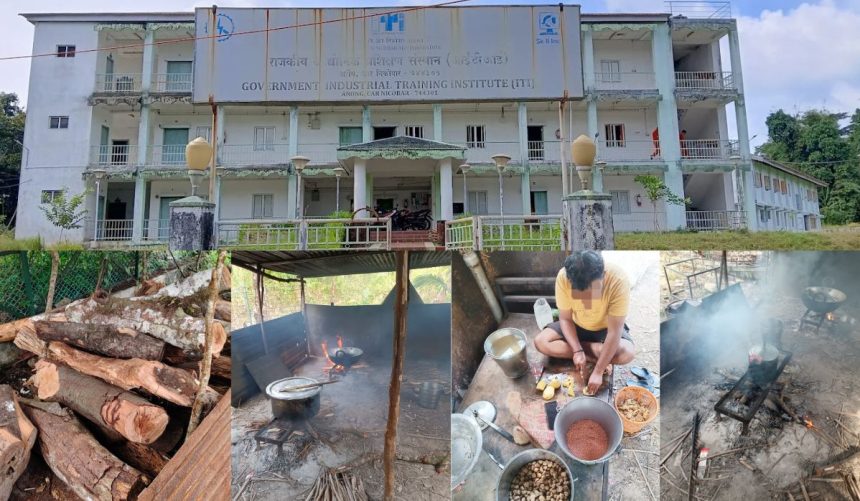
The former trainee also raised serious concerns regarding hostel management. The email alleged that there were no regular cooks and that hostel workers had not received their salaries for around five months, following which they stopped reporting for work. As a result, the trainee claimed that around 98 hostel students were compelled to prepare their own meals.
The In-Charge acknowledged that the shortage of hostel manpower and delayed payments had affected the functioning of the hostel. He said the delay was linked to administrative processes and that staff from other offices had, at times, been sent to assist with food preparation. He also confirmed that students had participated in preparing meals themselves.
According to the former trainee, students were required to wake up at around 4 a.m. to prepare breakfast and lunch before attending classes and later prepare dinner, leaving them with less time for their studies.
The trainee also alleged that the absence of LPG forced students to use firewood for cooking, exposing them to smoke and resulting in breathing difficulties and eye irritation.
The In-Charge acknowledged that students had been involved in cooking but said the arrangement was organised in batches, with different groups of students taking turns. He described the situation as a consequence of the difficult circumstances in a remote area such as Car Nicobar, while stating that efforts were made to support the students as much as possible.
The former trainee further alleged that the hostel lacked a water purifier and had inadequate hygiene and sanitation facilities, raising concerns about the safety and health of students living there.
The In-Charge, while acknowledging several operational difficulties, maintained that the institute was not without facilities and said efforts were being made to provide students with the maximum possible support under the circumstances.
He also pointed to other challenges faced in the remote location, including interruptions in electricity supply and limited mobile network connectivity.
The In-Charge said the institute had been communicating its requirements to the concerned authorities and that efforts were also being made to address the shortage of qualified trainers.
He expressed hope that trainers would become available for the new academic session and said efforts were being made to secure the materials required for practical training.
The former trainee, meanwhile, urged the concerned authorities to investigate the issues and ensure that students joining the institute in the coming academic session receive adequate trainers, equipment, hostel facilities, safe drinking water and a proper learning environment.
The allegations and the In-Charge’s response indicate that several of the concerns raised by the former trainees relate to genuine shortages and operational difficulties.